Welcome To Central Board of Open Schooling and Examination
CBOSE in News

EDUCATION - OPEN SCHOOLING - CBOSE - 2026
Central Board of Open Schooling and Examination
Open Board in India
|
Audience Candidates & parents |
Coverage All India open-schooling boards |
Primary Keyword Open Board in India |
Reading Time ~ 10 minutes |
|
10+ |
3 Lakh+ |
03 |
5+ |
|---|---|---|---|
|
Open Boards in India |
Open-Schooling Students / Yr |
CBOSE Streams |
CBOSE Subjects (Class 10) |
In the context of Indian school education, an 'open board' is an examination-conducting body that allows learners to appear for the secondary (Class 10) and higher-secondary (Class 12) examinations WITHOUT undergoing the rigid classroom-attendance requirement imposed by conventional school boards. The learner registers for a subject combination, prepares at her/his own pace (at home, in a coaching centre or in a study centre), appears for the examination at a designated centre, and receives a marksheet and certificate from the open board.
Open schooling in India is broadly divided into two arenas:
|
ONE-LINE DEFINITION Open Board = an examination body that lets learners sit for Class 10 / Class 12 without classroom attendance - self-paced learning, formal certification. |
India's open boards exist to widen access to secondary and higher-secondary certification for sections of the population that the conventional school system reaches incompletely:
For these learners, the open board model is, in many cases, the only realistic path to a recognised secondary and higher-secondary certificate that supports subsequent higher education and employment.
Among the open boards in India, the Central Board of Open Schooling and Examination (CBOSE) is one of the most prominently visible: it conducts open-schooling examinations, operates a candidate dashboard that is hosted on national IT infrastructure (NIC), and offers the standard three-Class-12 streams (Science, Commerce, Humanities / Arts).
Its public-facing portal at cbose.com is the entry point for: syllabus download, candidate notice board, accreditation of schools, examination announcements and the candidate login at cbose.com/student/login.php. The candidate dashboard, in turn, surfaces marksheets, academic result, profile management and the digital marksheet the Board treats as authentic for admission, employment and verification.
|
WHY CBOSE STANDS OUT (1) National portal on NIC infrastructure. (2) Standard 3 streams at Class 12 (Science / Commerce / Humanities). (3) Practical examinations + TMA structure aligned with the open-schooling model. (4) CABOSE-comparable accreditation pathway so that schools and study centres can host candidates. (5) Student dashboard issuing digital marksheets with the marksheet treated as authentic for downstream uses. |
The list below enumerates the principal open-schooling boards ordinarily visible in the open-schooling ecosystem. CBOSE is highlighted.
|
# |
Board |
Coverage area |
Exam Level |
|---|---|---|---|
|
01 |
|
|
|
|
|
CBOSE |
|
|
|
|
|
National (Central Board of Open Schooling and Examination) - in focus. |
|
|
|
|
|
Class 10/12 |
|
02 |
|
|
|
|
|
NIOS |
|
|
|
|
|
National Institute of Open Schooling - national. |
|
|
|
|
|
Class 10/12 + more |
|
03 |
|
|
|
|
|
MPBOSE / MPSOS |
|
|
|
|
|
Madhya Pradesh State Open School. |
|
|
|
|
|
Class 10/12 |
|
04 |
|
|
|
|
|
Rajasthan Open School |
|
|
|
|
|
Rajasthan State Open Schooling Board. |
|
|
|
|
|
Class 10/12 |
|
05 |
|
|
|
|
|
HPBOSE / HP SOS |
|
|
|
|
|
Himachal Pradesh State Open School. |
|
|
|
|
|
Class 10/12 |
|
06 |
|
|
|
|
|
BOSSE |
|
|
|
|
|
Board of Open Schooling and Skill Education, some states. |
|
|
|
|
|
Class 10/12 |
|
07 |
|
|
|
|
|
KSB / KOS B |
|
|
|
|
|
Karnataka State Open School equivalent boards. |
|
|
|
|
|
Class 10/12 |
|
08 |
|
|
|
|
|
WBCHSE / Open |
|
|
|
|
|
West Bengal open-schooling stream variant. |
|
|
|
|
|
Class 10/12 |
|
09 |
|
|
|
|
|
Telangana / AP Open |
|
|
|
|
|
Telangana and Andhra Pradesh open-schooling boards. |
|
|
|
|
|
Class 10/12 |
|
10 |
|
|
|
|
|
Other State Open |
|
|
|
|
|
Several other State Open School Boards exist - list is illustrative, not exhaustive. |
|
|
|
|
|
Class 10/12 |
The two most-asked boards in India are CBOSE and NIOS. Their positioning is summarised in the table hereunder.
|
Aspect |
CBOSE |
NIOS |
Practical Note |
|---|---|---|---|
|
Focus |
|
|
|
|
|
Open schooling examinations. |
|
|
|
|
|
Open schooling + vocational + life-enrichment. |
|
|
|
|
|
CBOSE = exam-centric; NIOS = broader. |
|
Portal |
|
|
|
|
|
cbose.com on NIC. |
|
|
|
|
|
nios.ac.in on NIC. |
|
|
|
|
|
Both hosted centrally. |
|
Dashboard |
|
|
|
|
|
cbose.com/student/login.php |
|
|
|
|
|
sdmis.nios.ac.in |
|
|
|
|
|
Candidate self-service. |
|
Streams (Class 12) |
|
|
|
|
|
Science / Commerce / Humanities. |
|
|
|
|
|
Science / Commerce / Humanities + more. |
|
|
|
|
|
CBOSE = standard 3; NIOS = a wider set. |
|
Examination Cycles |
|
|
|
|
|
Ordinarily annual; ordinarily June (with re-sit where allowed). |
|
|
|
|
|
Multiple Public Examinations (Oct & Apr-May). |
|
|
|
|
|
NIOS offers 'on-demand' flexibility to a degree. |
|
TMA / Practical |
|
|
|
|
|
TMA + practical examinations, ordinarily. |
|
|
|
|
|
TMA + practical examinations, ordinarily. |
|
|
|
|
|
Equivalent structurally. |
|
Special Strength |
|
|
|
|
|
Standardised 3-stream structure at Class 12 - easy for schools to align with. |
|
|
|
|
|
Wider basket of subjects and vocational courses. |
|
|
|
|
|
CBOSE = focused; NIOS = broad. |
|
Typical Use Case |
|
|
|
|
|
Schools adding open-schooling vertical. |
|
|
|
|
|
Individual learners / drop-outs / working adults. |
|
|
|
|
|
Both serve overlap. |
In the practical experience of schools and candidates, CBOSE is chosen because:
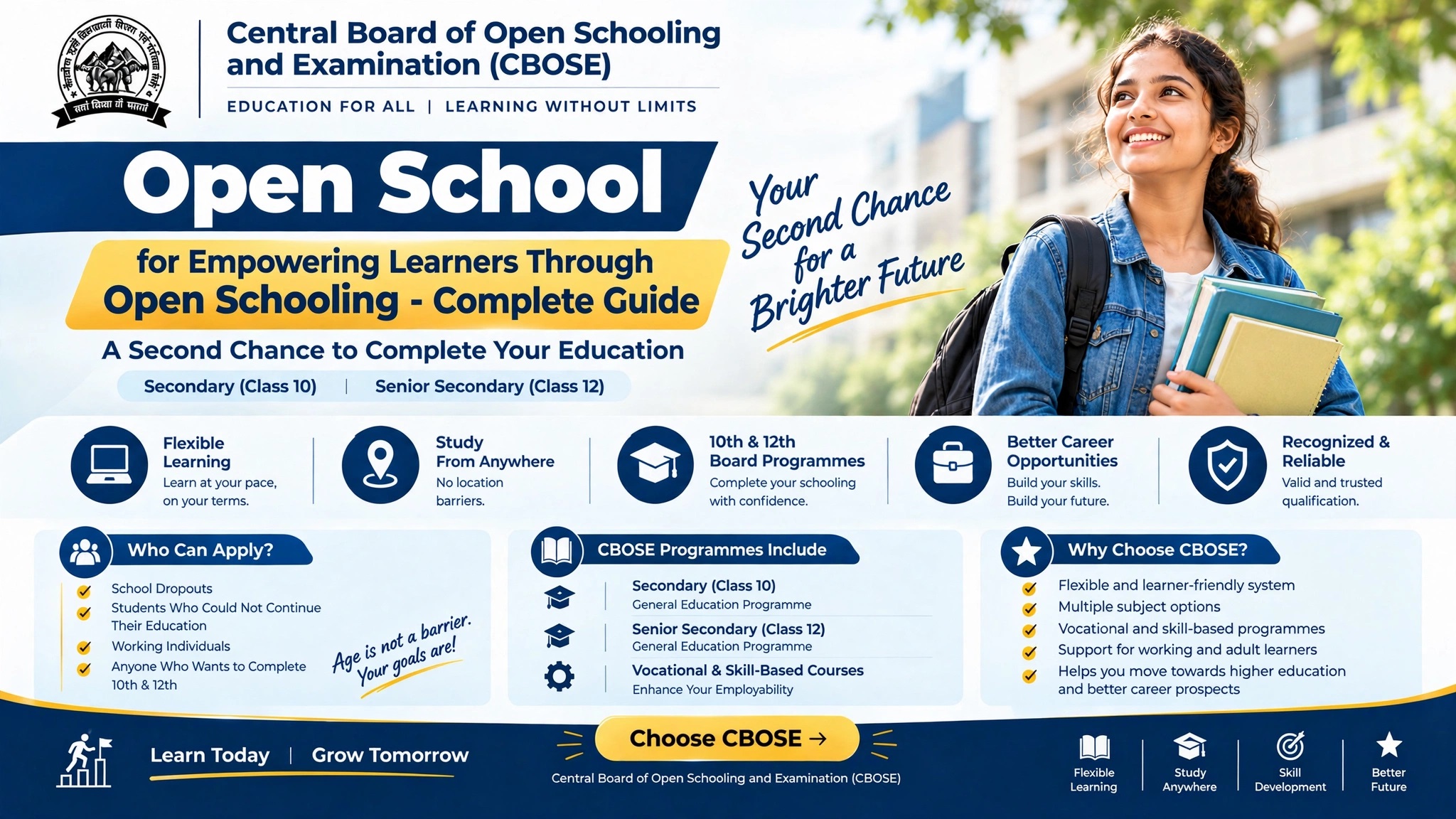
CBOSE enrolment is ordinarily open to:
Class 12 is offered in three streams. Subjects in each stream:
|
Stream |
Compulsory subjects |
Optional / Elective |
Practical? |
|---|---|---|---|
|
Science (PCM) |
|
|
|
|
|
Physics, Chemistry, Maths, English. |
|
|
|
|
|
Computer Sc. / IP / elective. |
|
|
|
|
|
Yes |
|
Science (PCB) |
|
|
|
|
|
Physics, Chemistry, Biology, English. |
|
|
|
|
|
Maths / elective. |
|
|
|
|
|
Yes |
|
Commerce |
|
|
|
|
|
Accountancy, Business Studies, Economics, English. |
|
|
|
|
|
IP / Mathematics / elective. |
|
|
|
|
|
Some |
|
Humanities / Arts |
|
|
|
|
|
History, Geography, Pol. Sc., English. |
|
|
|
|
|
Sociology / Psychology / elective. |
|
|
|
|
|
Some |
The examination cycle is ordinarily annual - the most common cycle is the JUNE examination, ordinarily held with the TO-MAY written component and the practical component shortly before or after the theory component.
Theory papers ordinarily have the following structure (3 hours, marks distribution ordinarily 80 + 20 or 70 + 30 depending on subject):
|
STEP 1 |
Open cbose.com |
On the official portal, locate the 'Admissions' / 'Candidate' tab. |
|---|---|---|
|
STEP 2 |
Create an account |
Provide email + phone; complete OTP verification; set a password. |
|
STEP 3 |
Select stream & subjects |
Pick Class 10 / Class 12 + stream + subjects; double-check the combination before paying. |
|
STEP 4 |
Upload documents |
Identity, address, photograph, prior marksheet; PDFs ordinarily preferred. |
|
STEP 5 |
Pay fee online |
Pay the enrolment / examination fee through the official payment gateway. |
|
STEP 6 |
Receive Student Code |
On success, a unique Student Code is issued; this code is also the login ID at cbose.com/student/login.php. |
Most boards ask for the following documents, ordinarily; the precise requirements are shown at the time of enrolment on cbose.com.
After the examination, candidates ordinarily receive their results through the student dashboard at cbose.com/student/login.php:
|
Question |
Answer |
|---|---|
|
Q. What is an Open Board in India? |
A. An examination body that conducts Class 10 / Class 12 examinations without mandatory classroom attendance - open to self-paced learners. |
|
Q. Which is the best open board in India? |
A. 'Best' depends on the candidate's need. For a stream-aligned structure and a national portal, CBOSE is one of the most-considered options. |
|
Q. What is CBOSE - full form? |
A. Central Board of Open Schooling and Examination. |
|
Q. Is CBOSE the same as CBSE? |
A. No - CBOSE is an open-schooling examination Board, CBSE is a conventional secondary education Board. They are institutionally distinct. |
|
Q. Is CBOSE the same as NIOS? |
A. No - CBOSE focuses on streams-aligned open-schooling examinations, NIOS offers a broader open schooling + vocational + life-enrichment portfolio. |
|
Q. What is the difference between academic and open boards? |
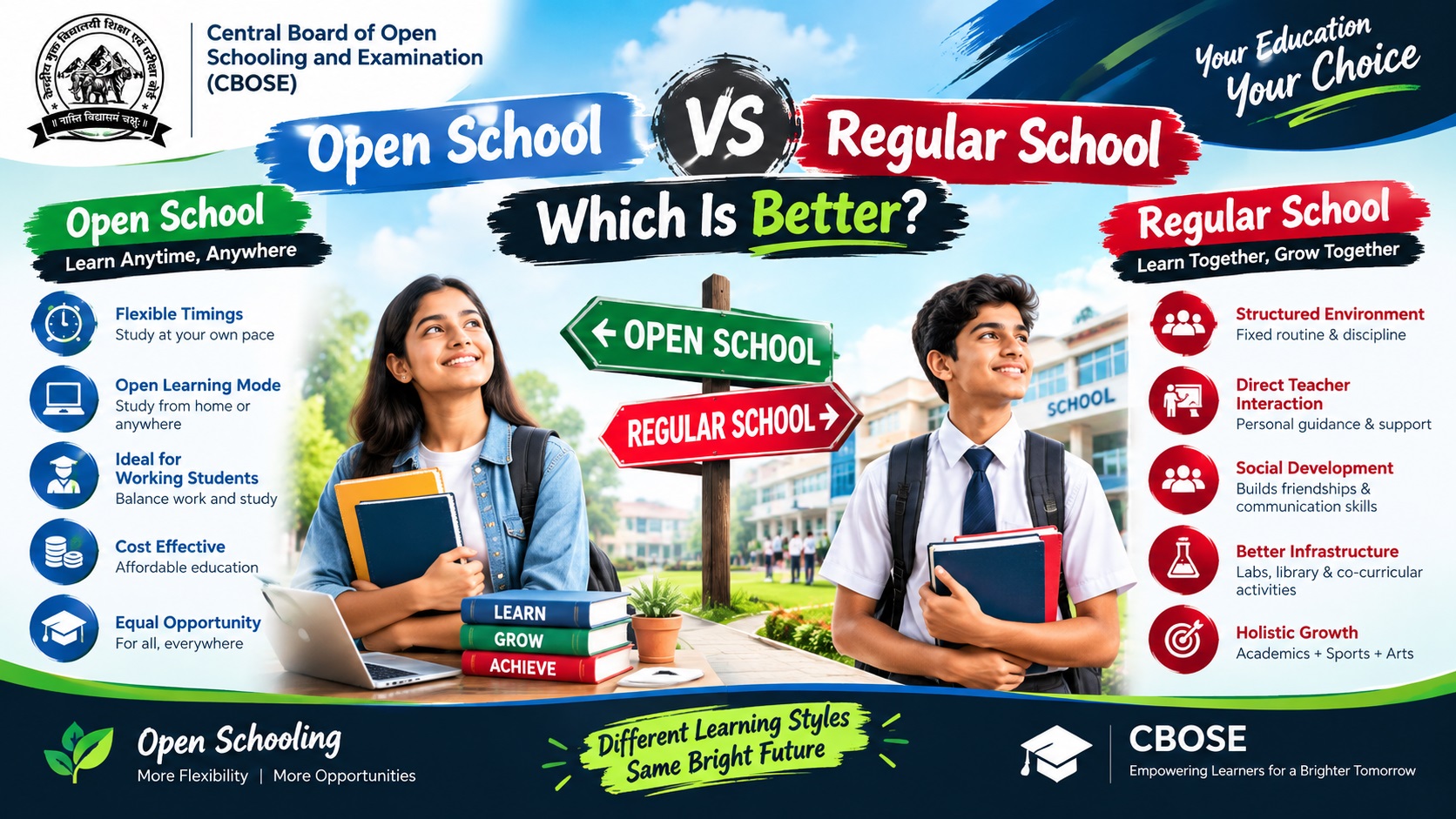
A. Academic boards (CBSE, ICSE, State Boards) require classroom attendance. Open boards (CBOSE, NIOS) do not. |
|
Q. Are open boards recognised? |
A. This Brief does not adjudicate the formal recognition issue; certificates are accepted for downstream use consistent with the prevailing policy framework. |
|
Q. What subjects does CBOSE offer? |
A. Class 10 - Hindi, English, Maths, Science, Social Science + optional. Class 12 - streams in Science, Commerce and Humanities. |
|
Q. What is the examination mode? |
A. Theory paper (3 hours) + Practical paper (where applicable) + Tutor-Marked Assignment (TMA) - ordinarily annual. |
|
Q. How do I log in to the CBOSE dashboard? |
A. Open cbose.com/student/login.php; enter Student Code + password; click Sign In. |
|
Q. What if I forget my CBOSE password? |
A. Use the 'Forgot Password' link on the login page; reset through OTP to registered mobile / email. |
|
Q. How do I get the digital marksheet? |
A. Log in to cbose.com/student/login.php; open 'Academic Result'; pick the year; click 'Download Marksheet (PDF)'. |
|
Q. Does CBOSE conduct re-sit / compartment examinations? |
A. Re-sit / compartment rules are ordinarily published in the examination notice - ordinarily available to a candidate who has failed one or two subjects. |
|
Q. Will CBOSE marksheet work for government jobs? |
A. The marksheet is ordinarily accepted by employers as per the prevailing recruitment rules - consult the specific recruitment notification for qualifying examination norms. |
|
Q. Does CBOSE have a Class 11 in the open-schooling model? |
A. Open schooling ordinarily admits candidates directly to Class 10 / Class 12; 'Class 11' is ordinarily a part of the standard 2-year academia before sitting Class 12. |
|
Q. Can a CBOSE candidate apply for college admissions? |
A. Yes - candidates ordinarily apply for higher-education using their Class 12 marksheet, which is ordinarily accepted for admissions consistent with the prevailing policy framework. |
|
Q. How do schools become accredited to CBOSE? |
A. Through the formal accreditation pathway on cbose.com - eligibility scan, document upload, fee, on-site inspection, accreditation letter. |
|
Q. Where is the official portal? |
A. https://cbose.com. Student login page: https://cbose.com/student/login.php. |
|
Q. Can CBOSE certificates be verified online? |
A. The Board's verification framework ordinarily supports verification of certificates as a part of the marksheet process. |
|
Q. Is CBOSE free? |
A. The Board's syllabus booklet is ordinarily free to download from the website; enrolment fees and examination fees are ordinarily applicable and are shown at payment time. |
>> An Open Board in India is an examination body that lets candidates sit for Class 10 / Class 12 without rigid classroom attendance - open to all ages.
>> CBOSE - Central Board of Open Schooling and Examination - stands out for its national portal, stream-aligned structure and integrated dashboard at cbose.com.
>> The Open Schooling landscape includes CBOSE, NIOS and several State Open Schooling Boards - candidate picks based on fit, not on ranking alone.
>> CBOSE vs NIOS shows CBOSE = exam-centric, stream-aligned; NIOS = broader portfolio inc. vocational.
>> Enrolment pathway: cbose.com -> create account -> pick subjects -> upload docs -> pay fee -> get Student Code -> log in at cbose.com/student/login.php.